



 LOGIN
LOGIN

Common Name: Combava | Latin Binomial: Citrus hystrix
This article focuses on the essential oil derived from Combava (Citrus hystrix) leaves, known for its purifying, cleansing, and protective qualities. Discover the key therapeutic benefits, distinctive characteristics (its personality), and aromatherapy blending ideas.
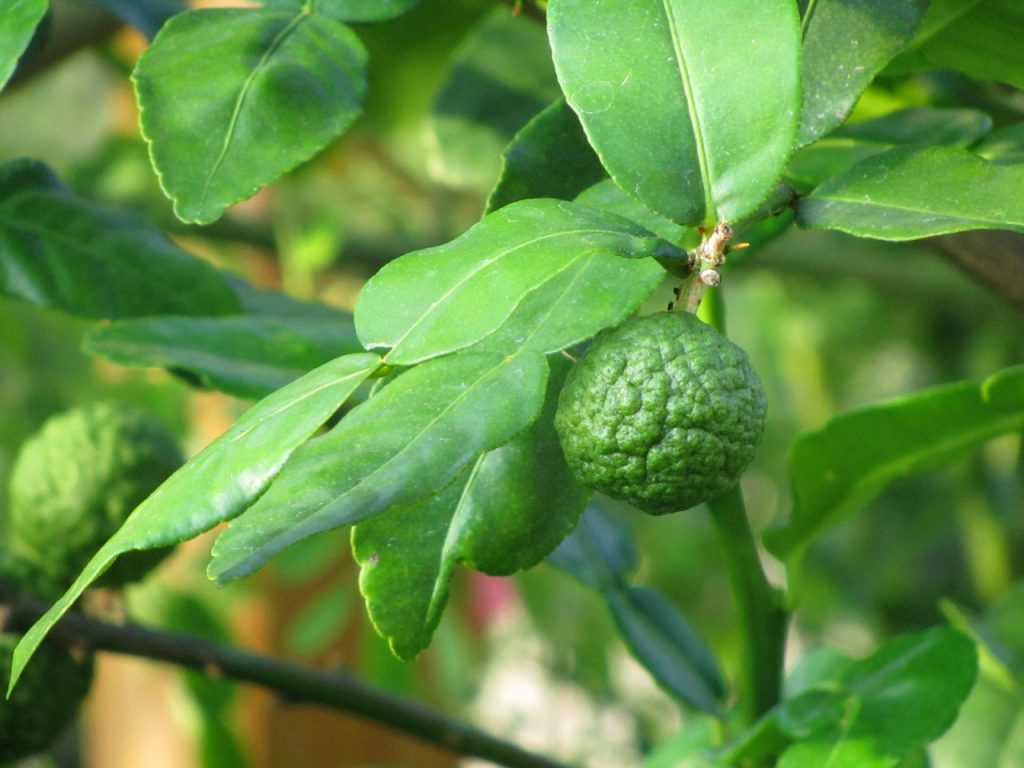
Exploring Combava Essential Oil: Its Origin and Various Names
Combava essential oil is most often encountered in its “petitgrain”[1] form: steam distilled from the leaves and twigs of the evergreen; fruit bearing tree called Citrus hystrix of the Rutaceae family.[2] (Though I must mention that I have two exquisite specimens of cold-pressed essential oil from the fruit rind. Delightful! The fruit-peel oil deserves its own article.) The leaves of this thorny, bushy plant are quite distinct with two lobes connecting by a tough, central vein. Originating from tropical Asia, this gem of a plant is most often grown and distilled for its leaf oil in Indonesia, India, Thailand and Madagascar.
C. hystrix is from the ancient Greek meaning “porcupine” which translates into “spiny” and refers to the many thorns of the plant. Combava is from the French, but the plant goes by many other names: Kaffir[3] Lime, Makrut Lime, Thai lime, Wild lime, leech-lime and Mauritius papeda.
The Cultural Significance and Spiritual Benefits of Combava in Southeast Asia
Combava is highly integrated into Indo-Maylay-Thai culture. According to Lior Lev Sercarz of La Boite, the plant is indispensable in Southeast Asian cuisine and what helps give Thai green paste some of its flavor and sourness unique to fundamental Thai flavor.[4] C. hystrix is considered a sacred, protective plant —note how its thorns may imprint a protective energy into the essences we use and be available to us when working on the emotional and etheric levels. The leaves and fruit are highly regarded as physical, spiritual and energetic cleansers: of note, the fruit is an important ingredient in “mandi berlimau,” a sacred bathing ceremony.
Enigmatic Personality of Combava: Cleansing and Unique
Combava, with its protective thorns, bumpy fruits and unique leaves has a certain “je ne sais quoi.” The aroma of this citrus leaf is distinctly unlike any other citrus and quite mysterious. Its cleansing but gentle nature helps “wipe the slate clean,” allowing a fresh space for silence, contemplation and possibilities.

Core Applications of Combava Essential Oil for Holistic Well-being
Following are core applications for the essential oil: it is an excellent cleanser for the body, emotional, spiritual and energetic work. It is a worthy addition to “aches and pains” blends and respiratory support blends.
| System | Core Applications |
| Musculoskeletal & Circulatory | Arthritis, rheumatism, pain, inflammation, spastic tension |
| Skincare | Oily skin, acne |
| Respiration | Antibacterial[5], anti-infectious |
| Nervous/Psyche/Emotion | Uplifting, clarity, hyperactivity, mental tension, stress |
| Energetics | Dispelling unwanted energy, space clearing |
Chemistry and Safety of Combava Essential Oil
Combava essential oil is saturated in the lovely aldehyde of Citronellal, ranging from 58 to 82% according to Tisserand & Young, and is supported by monoterpenols and monoterpenes. Combava, like most petitgrain oils, is generally regarded as safe when properly dosed and administered.
Aromatherapeutic Blending with Combava Essential Oil
Combava leaf initially greets your palate with fresh, crisp, slightly sweet-green-acidic notes. It pulls your face muscles into a smile, leaving you no choice but to continue into its tart, leafy, rosy-geranium-aldehyde aromas. Refreshing molecules of limey-citronella and Murphy’s Oil Soap create the backbone of its aromatic profile with a zesty-tangerine spice at the end. Zing!
Blending Tip: Consider using restraint when blending with this essence as it is a bit bolder than other petitgrain essential oils. The high citronellal content contributes to its vibrant presence and staying power.
Combava petitgrain essential oil blends well with: Ginger (Zingiber officinale), Lemongrass (Cymbopogon citratus or C. flexuosus), Coriander seed (Coriandrum sativum), Turmeric (Curcuma longa), Black pepper (Piper nigrum), Vetiver (Vetiveria zizanoides), Ylang ylang Complete (Canaga odorata), Sandalwood (Santalum album), Patchouli (Pogostemon cablin), Geranium (Pelargonium graveolens).
Holistic Aromatherapy Delivery Methods with Combava Essential Oil
Combava Space and Auric Cleansing Spray
Incorporate the uplifting and clarifying energy of Combava petitgrain (ZING!) with other cleansing and protective oils to create a spatial, spiritual and auric cleanser. Aromatherapy is paradoxical—”uplifting” does not cancel out “calming.” When you blend, think about how these uplifting and clearing oils may help wash away unwanted energies, allowing space for clarity, protection, and spiritual purification.
You may choose to use this blend of essential oils directly in a diffuser. Regardless of your method of delivering these precious oils to your space, be sure to take the time to be with the aromatic chemicals and notice your experiences with them.
What you need:
- 2 or 5 ml glass blending bottle
- 2 ounce glass bottle with spray top
- 16 drops Yarrow (Achillea millefolium) essential oil
- 12 drops Eastern Red Cedar wood (Juniperus virginiana) essential oil
- 9 drops Sweet grass (Hierochloe odorata) tincture
- 2 drops Camphor leaf (Cinnamomum camphora) essential oil
- 2 drops Combava petitgrain (Citrus hystrix) essential oil
- 1 drop Cistus (Cistus ladanifer) essential oil
- 1 drop Galbanum (Ferula galbaniflua) essential oil
- 60 ml distilled water OR hydrosol of choice (I chose Sweet Fern)
- How to make: Gather the materials as you set your intention. Combine the essential oils & tincture into the small glass bottle, affix the cap and swirl the bottle around to incorporate the extracts. When you are ready to make the spritzer, set your intention again. Combine the hydrosol (or water) and blend to the bottle spray bottle. Affix the spray cap and label the bottle appropriately.
To use: Shake before using. Use routinely for space clearing (e.g., spray and wipe doorways, window frames, and the perimeter of a room) or during spiritual practices to purify and protect the aura.
Free Course: Discover the Science Behind Creating Your Own Aromatherapy Sprays
Skincare: Blemish Gel
Don’t reach for harsh ingredients to work with problem areas and blemish spots! Combava petitgrain is a wonderful cleansing and antibacterial agent that is gentle enough for the skin.
What you need:
- Small glass or stainless-steel bowl
- Stirring stick
- 1 (1-ounce) glass pump-top bottle or glass jar with lid
- 1 tablespoon aloe vera gel
- 1 tsp witch hazel hydrosol
- 5 drops Combava petitgrain (Citrus hystrix leaf) essential oil
- 5 drops Sweet Marjoram (Origanum majorana) essential oil
- 10 drops Lavender (Lavandula angustifolia) essential oil
- 5 drops Geranium (Pelargonium graveolens) essential oil
- 5 drops Thyme CT linalool (Thymus vulgaris ct linalool) essential oil
How to make: Combine the aloe and witch hazel into the bowl, stirring to combine. Next add the essential oil blend, stirring well to incorporate the oils through the medium. Transfer the gel to your container, cap tightly and label appropriately. Store the gel in the refrigerator for freshness.
How to use: Cleanse your hands and the areas to be treated to remove dirt and oil. Using your fingertip, apply a small drop of the gel to problem areas. Let the gel naturally absorb into your skin, do not rub. Repeat as needed.
Working with the Leaves: Infusions
- Water infusion. Looking for a simple way to bring calming joy to any day? Enjoy a simple tisane. Tear up a small handful (6 or so) of Combava leaflets, place them into a cup of near-boiling water and cover the cup for about 10 minutes. Keep the leaves in as you sip or discard as compost. These leaves aren’t always easy to find: I often find them at specialty food stores, such as Kalustyan’s here in NYC.
- Oil Infusion. Riff off of ideas from Lior Lev Sercarz and Thai-inspired cooking by heat-infusing Combava leaves in a light tasting seed oil (e.g., grapeseed) then drizzle the infusion over salads, soups or chicken and fish dinners.
- Alcohol infusion. I was recently at Gotham Bar and Grill speaking with one of the bartenders (about…what other than aromatics) and mentioned I was spending a lot of time with Combava and guess what? He brought out a house-infused vodka made with–what other than Combava leaves–used in specialty cocktails. The aroma was divine and unmistakable.

In closing, let’s remember to be mindful and appreciative of the plants that provide us with essential oils. Embrace their many forms and allow their essence to inspire and guide us. Wishing you joy in your explorations, whether you are smelling, blending, creating, sipping, dabbing, or spraying.
[1] This post is about Combava leaf or “Petitgrain”—which means “little grains” and refers to when oil of petitgrain was distilled from the green, unripe fruit that was picked when it was the size of a cherry, or a “little grain.” The term “petitgrain” usually refers to Citrus aurantium var amara but “petitgrain” can be applied to all citrus trees when the oil is obtained from the leaf.
[2] Like many plants in the citrus family, the oil may also be obtained from the fruit; however, steam distillation is usually the preferred method over expression for Combava. The peel oil is comparatively rare to find versus the leaf oil.
[3] Here is a great example why using common names can be tricky and how language and meaning are different depending on culture and history: http://www.vancouversun.com/life/Kaffir+lime+tainted+with+sour+taste+racism/9964313/story.html
[4] The Spice Companion by Lior Lev Sercarz. Pg. 154
[5] Research from Thailand on the efficacy of Citrus hystrix peel and leaf essential oils on common respiratory pathogens: http://www.scienceasia.org/2012.38.n2/scias38_212.pdf
Leave a Reply