



 LOGIN
LOGIN
Rhododendron Anthopogon: Tranquil Resilience from Himalayan Peaks
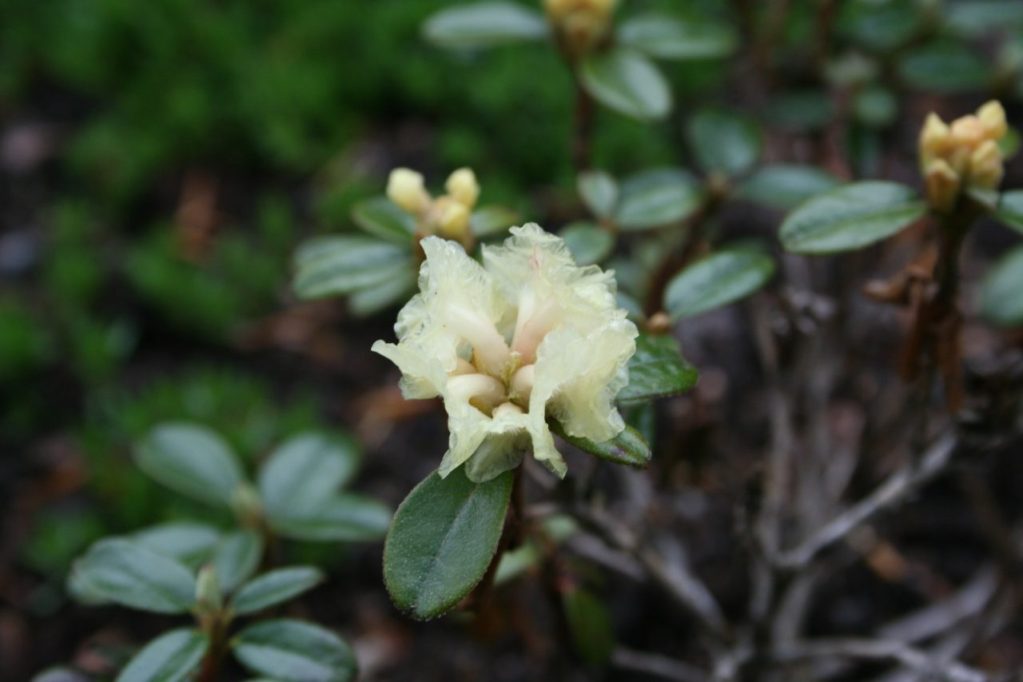
Rhododendron essential oil is obtained via steam or hydro distillation from the aerial parts of Rhododendron anthopogon; its leathery leaves being the most aromatic part of the plant. Also called “Sunpati” in its native Nepal, this short, evergreen shrublet is categorized into the Ericaceae family—which includes Azalea, Bog Labrador tea, Blueberry, Bayberry and Wintergreen—a commonality being these plants generally thrive in acidic soil and infertile, yet moist, growing conditions.
But Wait, Don’t Most Rhododendron’s Contain Toxic Chemistry?
Safety alert! There are over 800 species in the genus Rhododendron,[3] most of which contain the water-soluble toxin (andromedotoxins) in the leaves and pollen [4],[5]. R. anthopogon is NOT the rhododendron many of us know and grow in USA or elsewhere around the globe; this species is one of the very few to be considered non-toxic.
Anthopogon is considered to be one of the smallest plants in the Rhododendron genus as it grows no more than 2 – 3 feet. It thrives in the high altitudes (3,000-4,800 meters) of the majestic Himalayan Mountain range; found across Nepal, Pakistan, northern India, Bhutan and SE Tibet. The plant is mainly harvested in Nepal for its aromatic essence, where annual production of the essential oil is roughly 250–450 kg[1].
Rhododendron: A Sacred Nepalese Plant Ally
This sacred plant is a national symbol of Nepal[2] and revered for its medicinal use. The plant material (i.e., flowers and leaves) is often used in native medicine for digestive (i.e., stomach, liver) and respiratory disorders. More specifically, it is thought to promote digestive fire and work with symptoms manifesting as wet catarrh.
Supporting Spiritual Practices
On a spiritual level, anthopogon leaves are often mixed with needles from members of the Cupressaceae family such as Cryptomeria japonica (called “Tsugi Pine” in Nepal) and burned as incense to support Buddhist and Hindu spiritual practices. Holistic note: Its essential oil brings a bright, fresh, awakening quality to the mind; this is more than a “nice scent”, it is effortlessly opening, uplifting, cleansing, brightening. If one word could sum it up: lucidity.

Core Applications for Rhododendron Essential Oil
| System | Core Applications |
| Musculoskeletal & Circulatory | Pain, inflammation |
| Respiration | Antimicrobial (antibacterial, antifungal), general immune stimulant, clearing, decongesting (especially wet catarrh) |
| Nervous/Psyche/Emotion | Anti-depressant, anti-anxiety, encourages states of stillness and calm |
| Energetics/Spiritual | Promoting sacred space, energy clearing, holding space |
Is Rhododendron Essential Oil Safe?
Yes, Rhododendron anthopogon essential oil is generally recognized as safe. However, it is a known skin sensitizer when oxidized due to is rich monoterpene content. Avoid using oxidized essential oils on the body — but don’t throw those away — use them to clean with. Tip: store monoterpene-rich oils in the refrigerator and keep air/head-space to a minimum to slow oxidation.
Chemistry highlights: Rhododendron essential oil is abundant in monoterpenes (notably alpha and beta pinene, d-limonene and cis-ocimene) and supported by sesquiterpenes (e.g., delta and gamma cadinene and beta caryophyllene).
Blending with Rhododendron Essential Oil
Supporting Stillness: Nepal’s Frankincense
Rhododendron anthopogon essential oil exudes a quiet yet invigorating presence, offering freshness and clarity that encourage lightheartedness and mental stillness. It transports one to a place of quietude and respite, where its aromatic chemistry fills the mind with lucidity—Nepal’s Frankincense. Its deeply soothing affinity for the lungs fosters effortless deep breathing. The oil acts as a subtle but powerful circulatory stimulant, lifting the spirit with an outward and upward flow of energy rather than drawing inward or grounding. Notes: it repeatedly goes to the lungs then up to the 3rd eye/temples. Furthermore, if I’m with the oil after eating, stimulation is brought to lungs then the stomach, after a few minutes the energy goes upward, to the head, with a signature of pulsing outward and upward. (More from my notes: it goes where it needs to go, where there is stagnation.)
Scent Personality and Characteristics
Anthopogon boldly fills the air with a sweet, spring-floral aroma. It is full, wet, big and expansive. Underlying the floral introduction is a pervasive herbaceous, balsamic backbone layered with spicy, slightly-smoky-woody undertones. Pipe tobacco. The dry-down is fast—pay close attention—as the aromas ease into a quiet, mossy green and settle into a leathery-dampness. The ending ever-so-faintly brings to mind a clear, watery-blue pool, reminiscent of Opoponax.
Below is a photo of Whistlers “Nocturne: Grey and Silver” (1875). This painting helps convey how I feel when spending time with R. anthopogon essential oil. This essential oil is a complete Nocturne, a complete song. I don’t want to blend it with anything else! Its sacred aromatic conversation effortlessly clears and opens me and carries my thoughts and intentions to the heavens (literally, my mind empties each time I spent a few minutes focusing on breathing with the oil). My heart feels light after spending time with Rhododendron anthopogon. Again: Lucidity.

What Does Rhododendron Essential Oil Blend Well With?
Anthopogon essential oil blends well with many of the conifers (Pinus sylvestris, Tsuga canadensis, Picea mariana, Abies alba, Juniperus communis), Galbanum (Ferula galbanifera), Spikenard (Nardostachys jatamansi), Cape chamomile (Eriocephalus punctulatus), Khella (Ammi visnaga), Frankincense (Boswellia ssp.), Combava petitgrain (Citrus hystrix), Lemon (Citrus limon). What about other oils? Think of any other essential oil that supports expansive breath, promotes a still-clear mind, and helps clear stagnation/muck.
Creating Holistic Aromatherapy Products with Rhododendron Essential Oil
Supportive Breath Essential Oil Blend
Tap into Rhododendron’s gentle but expansive nature with the following synergy of essential oils. These may be used by people with reactive airways (e.g., asthmatics) or those prone to labored breathing due to panic attacks. Rosemary CT verbenone combined with Rhododendron may help with catarrh; Cape chamomile and Khella are gentle anti-spasmodics.
I find this synergy to be incredibly relaxing, gentle and very chill. Deep, diaphragmatic breathing happens without thinking about it. The first word in my blending notes is “WOW.”
What you need to make 5 ml of synergy:
- A 5 ml bottle with cap and orifice reducer
- 45 drops Rhododendron (Rhododendron anthopogon)
- 18 drops Cape chamomile (Eriocephalus punctulatus)
- 18 drops Rosemary verbenone (Rosmarinus officinalis CT verbenone)
- 12 drops Khella (Ammi visnaga)
- 12 drops Combava petitgrain (Citrus hystrix) (or any other Petitgrain)
Sacred Peace: Finding Calm and Stillness
I write this post as some parts of the world (e.g., here in NYC) are slowly emerging into spring, when the azalea and rhododendron flowers will soon blossom. Ah, yes, this is when life gets more “productive,” days get longer, and we may find ourselves being more active. Give yourself permission to slow down. Work with the following synergy of sacred aromatic essences to engage with regenerative stillness and expansive contemplation. As mentioned, I have come to consider R. anthopogon “Nepal’s Frankincense.”
Following is a blending suggestion for a synergy to put in a 5 ml bottle:
- A 5 ml glass bottle with cap and orifice reducer
- 50 drops Rhododendron (Rhododendron anthopogon)
- 20 drops Hinoki (Chamaecyparis obtusa)
- 2 drops Atlas cedar (Cedrus atlantica)
- 1 drop Spikenard (Nardostachys jatamansi)

[1] http://www.perfumerflavorist.com/fragrance/rawmaterials/natural/Progress-in-Essential-Oils-Rhododendron-anthopogon-Oil-289497701.html
[2] Innocenti, Gabbriella, et al; Chemical Composition and Biological Properties of Rhododendron anthopogon Essential Oil; Molecues 2010, 15, 2326-2338.
[3] https://oregonstate.edu/dept/ldplants/rhody.htm
[4] https://www.kew.org/blogs/kew-science/hidden-poisons-rhododendron-nectar
[5] http://research.vet.upenn.edu/Plants/PlantsbyLatinName/Rhododendronmaximum/tabid/5669/Default.aspx
Leave a Reply