



 LOGIN
LOGIN
Persephone as the Axis of Emergence
Early spring always reveals a universal truth: life returns because death has done its work. This is the axis around which Season 5, Episode 4 of Essential Aromatica turns, not through sentiment, but through mythic ecology. In this episode, Persephone is not a victim or a pawn between Demeter and Hades. She is the living axis between “the Great Below” and “the Great Above”, the figure who embodies the necessary tension between descent and return.
This is the heart of mythic ecology: the movements we see in nature, such as emergence, disappearance, compost, renewal, mirror the movements within the psyche. Early spring’s first upward motion is only possible because of what winter transformed in the dark.
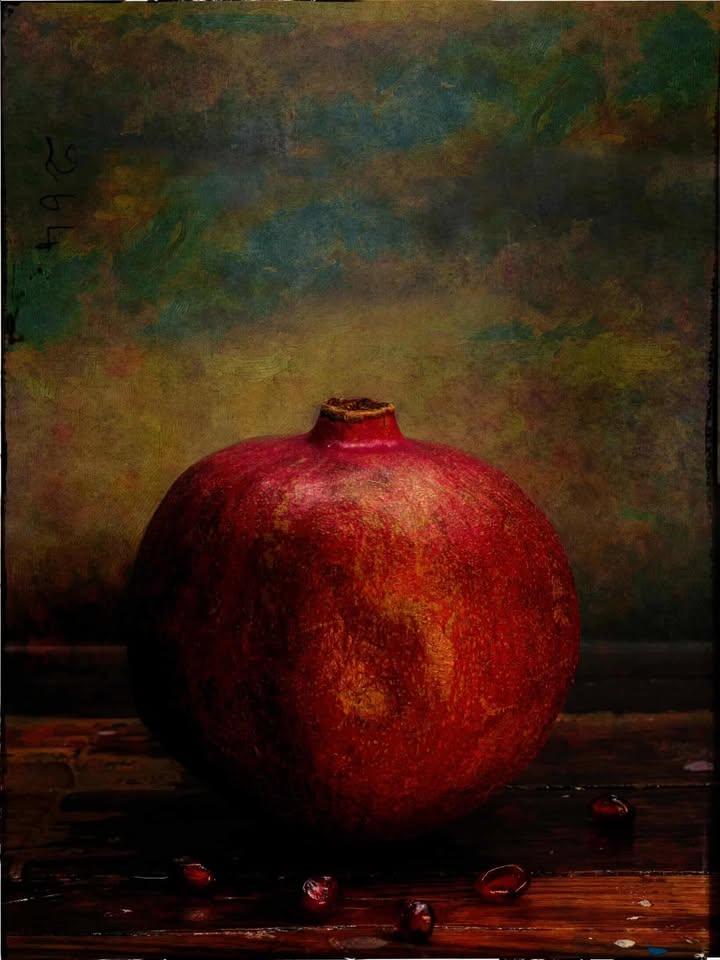
Image credit: Pomegranate photograph by Mark Kirsch. Used with permission. @_markkirsch | Web: MARK|KIRSCH
Reframing Persephone’s Descent as Agency
In the inherited version of the Persephone myth, she is abducted, tricked, or punished. But when we remove the layers of moralizing and projection, a different figure emerges. Persephone’s descent becomes a voluntary initiation, not a fall. Eating the pomegranate seeds is not a trap, it is the moment she internalizes the fertile unconscious, the Great Mother, the Dragon, the chthonic depths that feed all life.
This is the “three‑part truth” explored in the episode:
- Life returns because death has done its work.
- Life returns because decay feeds emergence.
- Life returns because return is a universal law.
This is also part of a meaningful aromatherapy practice: meeting each oil as a sensory experience rather than a tool to fix something. In one‑on‑one sessions, I facilitate this sensory connection so clients can meet essential oils—and themselves—more directly.
Pomegranate as a Desert‑Adapted Teacher
The pomegranate (Punica granatum) is a desert‑adapted shrub that thrives in heat, drought, and scarcity. Its leathery exterior protects hundreds of tightly packed arils. This is improbable abundance held inside a tough, protective skin. This is ecological symbolism at its clearest: resilience, hidden fertility, and the truth that nourishment often comes from challenging places.
Pomegranate seed oil, pressed from what the juice industry could consider waste, is a perfect example. Rich in punicic acid and deeply antioxidant, it supports skin that is depleted, stressed, or in need of repair. In aromatherapy, it’s a specialty fixed oil that is dense, protective, and effective when used in small percentages.
In the episode, I explore how this oil behaves differently from volatile essential oils, and why its chemistry makes it a powerful ally for topical work. But true regeneration, for skin or psyche, requires the right companions. Those aromatic allies and fixed oils, and how to pair them, are something I teach in advanced workshops and private sessions.
From Lilith to Persephone: The Seasonal Shift
This episode also marks the shift from late‑winter’s Lilith stirring, the spark inside the dark, to Persephone’s emergence. One simple way to attune to this threshold: notice what is rising around you and what is disappearing. Early ephemerals, migrating birds, the first green shoots — each is a reminder that emergence is always tied to what has already been transformed.
Working Beneath the Surface
If you’d like support with formulation, blending strategy, or aromatherapy for holistic wellbeing, I offer one‑on‑one in-person sessions tailored to your needs. You can access the full episode by streaming it below or clicking here.
You must be logged in to post a comment.